
Introduction: The Desert Kingdom’s Chilling Surprise
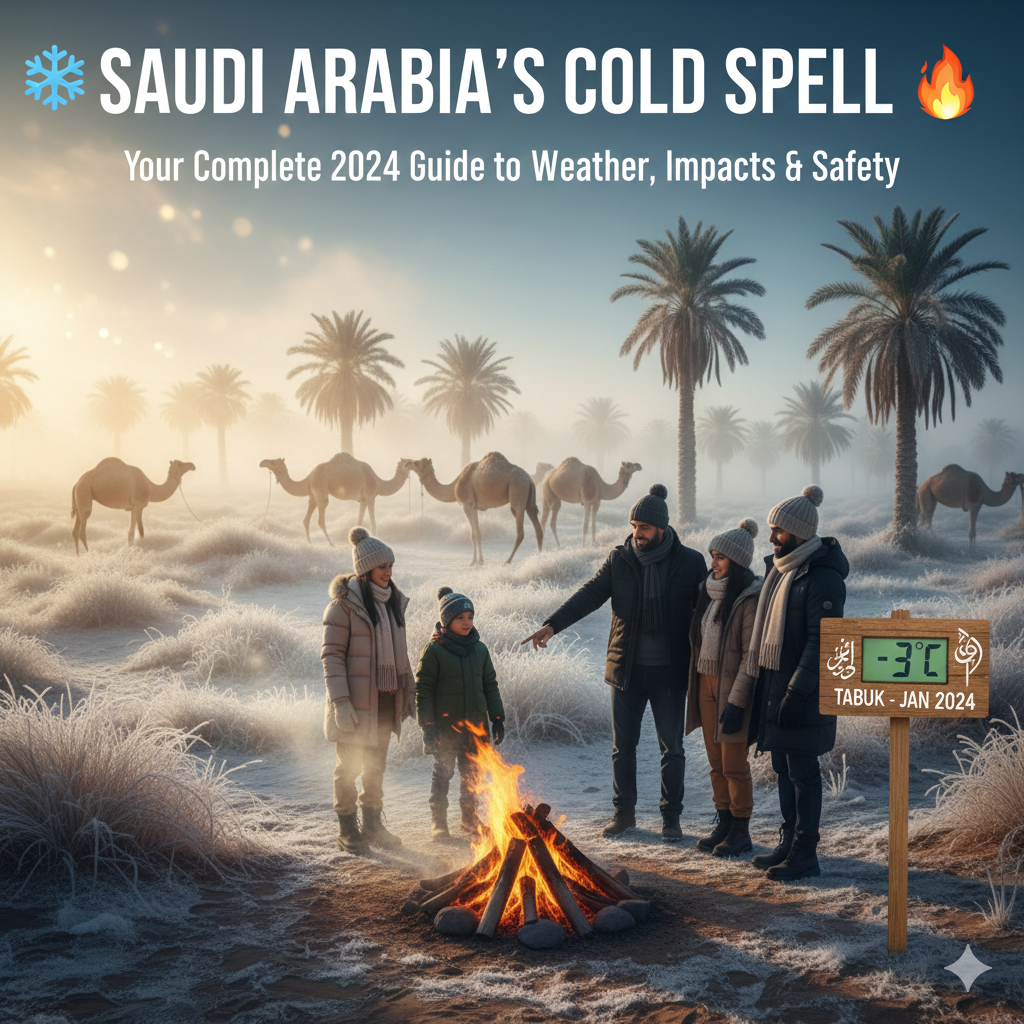
When people think of Saudi Arabia, they imagine scorching deserts and endless sunshine. Yet, every winter, a remarkable cold spell transforms the landscape, bringing frosty mornings to regions like Tabuk, Hail, and even northern Riyadh. In January 2024, temperatures plummeted to -2°C in Turaif, reminding residents that the Arabian Peninsula has a surprisingly diverse climate. Windy.com
This guide explores Saudi Arabia’s cold phenomena—from frost formation in agricultural areas to urban impacts—helping you understand, prepare, and stay safe during these chilly episodes. ncm.gov.sa
Understanding Saudi Arabia’s Cold Spells
What Causes Cold Spells in a Desert Climate?
Saudi Arabia’s winter cold results from:
- Siberian High Pressure Systems pushing cold air southward
- Clear desert skies allowing rapid nighttime heat loss
- High elevation areas (like Asir Mountains) experiencing lower temperatures
- Geographic positioning between Mediterranean and desert zones
Regions Most Affected by Frost
| Region | Typical Min. Temp | Frost Frequency | Key Cities |
|---|---|---|---|
| Northern Borders | -4°C to 2°C | High | Turaif, Arar |
| Tabuk Province | -3°C to 5°C | Very High | Tabuk, Al Wajh |
| Hail Region | 0°C to 6°C | Moderate | Hail, Baqaa |
| Al Jouf | -2°C to 4°C | High | Sakakah, Qurayyat |
| Riyadh North | 3°C to 8°C | Low | Occasionally affected |
Agricultural Impact & Frost Protection
Crops Most Vulnerable to Frost Damage
- Date palms (young trees)
- Wheat and barley (winter crops)
- Citrus fruits (oranges, lemons)
- Vegetables (tomatoes, cucumbers in open fields)
- Olive groves (in Tabuk and Al Jouf)
Modern Frost Protection Methods Used in KSA
- Wind Machines – Mix warm upper air with cold ground air
- Sprinkler Irrigation – Water releases heat as it freezes
- Frost Blankets – Direct plant covering
- Smudge Pots – Increasingly replaced by eco-alternatives
- Smart Farming Sensors – IoT devices predicting frost events
Success Story: *Al-Jouf olive farms have reduced frost damage by 70% using sensor-based sprinkler systems.*
Urban Life During Cold Spells
Infrastructure Adaptations
- Building insulation becoming standard in northern cities
- Road treatment for rare ice formation
- HVAC systems designed for both heating and cooling
- Winter clothing markets thriving seasonally
Energy Consumption Patterns
- Electricity demand spikes during cold mornings
- Heating accounts for 35% of winter energy use in northern regions
- Solar heating systems gaining popularity in rural areas
Climate Change & Future Trends
Are Cold Spells Increasing or Decreasing?
Recent studies show:
- Fewer extreme cold days overall
- Unpredictable timing of cold snaps
- Shorter frost seasons but sometimes more intense events
- Agricultural zones shifting gradually southward
Saudi Green Initiative Connection
- Afforestation projects may create microclimate changes
- Renewable energy reducing urban heat islands
- Weather monitoring enhanced with NEOM smart technology
Safety Tips for Residents & Travelers
Home Preparation Checklist
- Insulate water pipes against freezing
- Check heating systems before winter
- Keep emergency blankets and warm clothing
- Stock basic supplies for 3-5 days
- Weatherstrip doors and windows
Travel Advisory
- Northern routes (like Highway 85 to Tabuk) may have reduced visibility
- Early morning frost on bridges and overpasses
- Desert camping requires four-season gear in winter
- Check @NCGA_SA (National Center for Meteorology) for alerts
Health Precautions
- Sudden temperature drops can trigger respiratory issues
- Layer clothing rather than one heavy piece
- Stay dry – desert cold feels colder with moisture
- Watch for hypothermia signs even at temperatures above freezing
Photographing Saudi Frost – A Unique Opportunity
Best Locations for Frost Photography
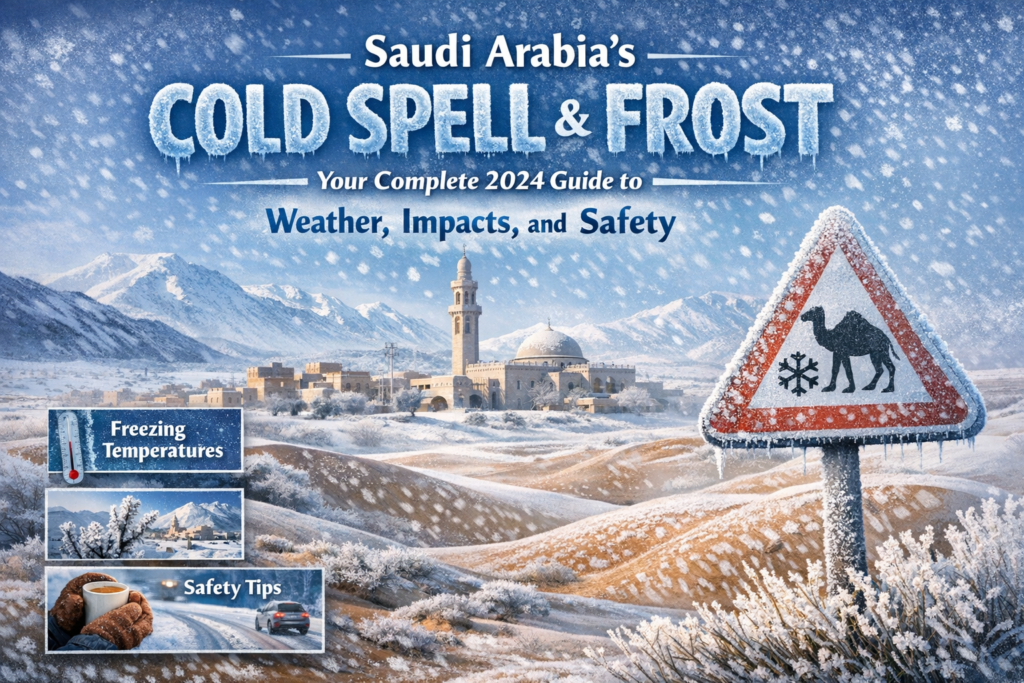
- Al Baha terraces – Mist and frost combination
- Tabuk olive groves – White-covered trees
- Riyadh’s Diplomatic Quarter – Frost on palm trees
- Edge of the World – Dramatic icy formations
Photography Tips
- Shoot at sunrise for golden hour glow on frost
- Use macro lenses for ice crystal details
- Capture contrasts – frost on desert plants
- Share with #SaudiFrost (growing social trend)
Historical Context & Cultural Aspects
Traditional Bedouin Adaptations
- Wool-lined tents (beit sha’ar)
- Winter migration patterns to sheltered valleys
- Traditional heating using minimal firewood
- Herbal remedies for cold-season ailments
Modern Saudi Winter Culture
- Winter festivals like Riyadh Season continue despite cold
- Outdoor majlis move indoors or use heaters
- Hot beverage consumption rises dramatically
- Shopping malls become popular evening destinations
Meteorological Resources & Apps
Official Saudi Sources
- National Center for Meteorology – ncm.gov.sa
- @NCGA_SA on Twitter/X – Real-time alerts
- WeatherSA App – Available on iOS/Android
- Civil Defense Alerts – Emergency notifications
International Tools Useful for KSA
- Windy.com – Excellent for visualization
- AccuWeather – Detailed forecasts
- Weather Underground – Personal weather stations
Frequently Asked Questions
Q: How cold does Saudi Arabia actually get?
A: The coldest recorded temperature was -12°C in Turaif (1950). Regularly, northern regions see -2°C to -5°C each winter.
Q: Does it ever snow in Saudi Arabia?
A: Yes! Snow falls occasionally in Tabuk, Northern Borders, and Asir Mountains. January 2022 saw significant snow in Tabuk.
Q: Are Saudi homes built for cold weather?
A: Traditionally no, but modern construction includes heating. Older homes use kerosene heaters and thick carpets.
Q: How long do cold spells last?
A: Typically 3-7 days, with the coldest periods in December and January.
Q: Is climate change ending Saudi cold spells?
A: Not ending, but changing patterns. Fewer cold days overall but potential for more extreme individual events.
Conclusion: Embracing Arabia’s Climate Diversity
Saudi Arabia’s cold spells reveal the remarkable diversity of the Arabian Peninsula’s climate. From frost-covered date palms to chilly desert mornings, these phenomena remind us that nature holds surprises everywhere.
For farmers, understanding frost patterns means protecting livelihoods. For residents, preparation ensures comfort and safety. For all Saudis, these cold spells represent another facet of their nation’s rich environmental tapestry.
As Saudi Arabia continues its transformational journey, integrating traditional knowledge with modern technology will help adapt to whatever weather patterns emerge in coming decades.
Call to Action
- Share your frost photos with #SaudiWinter
- Download the WeatherSA app for accurate forecasts
- Check on elderly neighbors during cold snaps
- Follow @NCGA_SA for official warnings
- Comment below with your cold weather experiences in KSA!