
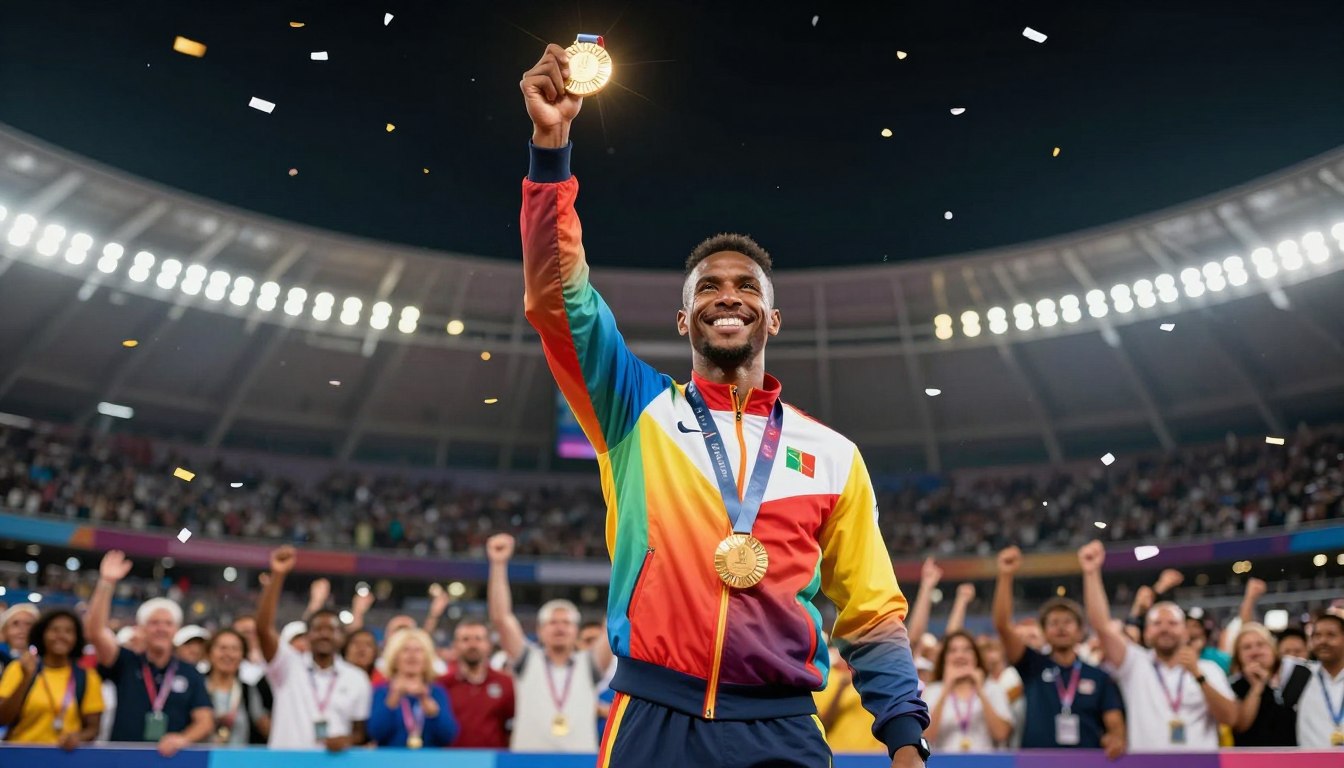
Viral Video Gold Medalist’s Incredible Moment
What happened: A widely shared clip tied to a gold medalist has swept social feeds across the United States. The short clip shows an intense on-field moment that many viewers call compelling and confusing.
Why this piece matters: This article separates confirmed reporting from rumor. We’ll explain what the clip appears to show, how audiences react, and how headlines can magnify partial context.

Verification first: For authenticity, rely on official Olympics coverage and verified channels. We’ll map which sources you can trust and show how to spot fake links or “full” leaks.
Safety preview: High-search interest can attract scam pages, fake logins, and malware. Later sections give practical steps to protect yourself and trace the resharing timeline and search spikes.
Key Takeaways
- We’ll separate confirmed facts from rumors about the clip.
- Use official Olympics channels for reliable verification.
- Headlines and resharing can distort context quickly.
- Beware of scam pages and fake login prompts tied to trending clips.
- The article maps how U.S. search spikes form and spread.
What Happened in the Viral Clip and Why It Made Headlines
A compact highlight from a Winter sports event became a focal point for online discussion almost overnight. The clip shows a tense on-field sequence: close camera angles, a decisive move at the finish, and an emotional reaction from the athlete and team.
The defining moment that sparked the surge
Viewers reacted to a clear, repeatable second that appears to capture the turning point of competition. The shot foregrounds the athlete’s posture, crowd noise, and immediate celebration. Those elements make the clip feel dramatic and memorable.
The mechanics behind quick reach
Short runtime and replay value make a single moment easy to share. A single caption can reframe the same clip as inspiring, controversial, or newsworthy. That framing often drives higher engagement and wider reposting.
Where the clip first gained traction
Initial shares on social platforms create repost chains that hit recommendation feeds. Once that happens, related posts and trends amplify reach fast. Early chatter around the 2026 winter olympics fuels extra interest and rapid re-uploads.
Tip: Compare what you see on social feeds with official Olympics coverage to confirm timestamps, event labels, and full broadcast context.
Gold medalist viral video: What’s Confirmed vs Rumor
A dramatic on-field second has reappeared across platforms, raising questions about how it was framed.
What official coverage helps confirm
Confirmed means you can match the clip to official Olympics coverage or accredited broadcasters.
Check event labels, on-screen graphics, and continuous audio. Look for reputable sports reports that cite primary footage.
What “leaked” or “link” claims usually lack
Claims of a leaked video or a hidden link often miss an original source, uncut footage, and a verifiable uploader.
Scandal headlines attract bad actors who push fake destinations to harvest clicks or credentials.
How to spot edited re-uploads and recycled clips
- Look for duplicated watermarks or abrupt cuts.
- Listen for mismatched crowd noise or altered commentary.
- Verify date and event—many reposts recycle older highlights and relabel them as new.
Names and identity claims
Mentions of Zyan Cabrera or Jerriel Cry4zee online should be treated as unverified unless official channels confirm them.
Do not enter a login or personal details on random watch pages; legitimate Olympic streams will not ask for outside credentials.
Takeaway:Verification depends on source, continuous context, and corroboration—not on sensational captions or the loudest link.
Timeline of the Viral Spread Across the United States
Within hours of the clip surfacing, searches across the united states climbed sharply as people sought context.

Initial attention often shows as a rapid search spike tied to short-form posts. When major accounts repost, a second surge follows. New captions that call something “breaking news” can trigger fresh interest days later.
Key search spikes and platform-driven amplification
Recommendation systems favor high-engagement video and push it into feeds. Comments, quote-posts, and debate threads can restart attention long after the first wave.
Common spikes you may see include interest after a trending hashtag, a news roundup, or claims of a “full” clip in social posts. These spikes can mix unrelated sports trends like world cup 2026 and t20 world cup into the same results.
- Live-score queries (canada live score, africa canada live, truly score latestly) often surface near clip searches.
- Cross-match chatter (india usa t20, stands india usa, spotted stands india) can bundle unrelated items in trending modules.
“If search results feel mixed with other sports topics, slow down — verify sources before clicking or sharing.”
Takeaway: Mixed search results are a red flag. Confirm timestamps and official channels before trusting or resharing any post.
Safety Alert: Scam Links, Phishing, and Malware Tied to Viral Video Searches
High-interest sports moments draw bad actors who weaponize curiosity with deceptive watch pages.

Common “watch the full video” traps and fake login prompts
Watch for shortened URLs, lookalike domains, and aggressive pop-ups that block content until you sign in.
Scammers create pages that mimic streaming layouts and then show fake login boxes.
Other traps ask you to install a “player” or extension to unlock the clip. That often carries malware.
How scammers use scandal keywords to push phishing pages
Scammers attach words like scandal, leaked video, or gold medalist scandal to bait clicks.
Phishing pages mimic known brands and then request credentials or payment details. A legitimate sports clip will not ask for passwords on an unknown site.
Quick steps to protect your accounts and devices
- Do not enter credentials on unfamiliar pages; close them immediately.
- Enable multi-factor authentication and avoid password reuse.
- Keep devices updated and run a reputable security scan if you downloaded anything.
- Use browser pop-up blockers and inspect links before clicking.
Where to watch or verify clips safely
Search official Olympics coverage and accredited broadcasters first. Trusted channels reduce exposure to scam redirects and counterfeit “full” pages.
Be wary if search results mix sports queries with tech-bait headlines like expand satellite internet, starlink expand satellite, or signs letter intent. Those unrelated hooks often signal a trap.
“If a page mixes scandal keywords with unrelated hot-button topics and asks for a login, leave immediately and use official Olympics coverage.”
| Risk | Signs | Immediate Action | Safe Alternative |
|---|---|---|---|
| Phishing | Login prompts on unknown domains | Close page; change passwords if entered | Visit official Olympics site or broadcaster |
| Malware | Requests to install players or extensions | Disconnect device; run antivirus scan | Watch on verified platforms or on-air replays |
| Scam links | Shortened/obfuscated URLs and tech-bait headlines | Do not click; report and block | Search reputable news outlets and official channels |
Conclusion
A single replayable moment captured online attention and prompted a wave of questions about context and source. The clip seems to show a tense finish and an emotional reaction, which is why it spread so fast.
Confirm vs. rumor: Verify through official Olympics coverage and accredited broadcasters before trusting any “full” link or reshared post. Treat identity claims—like mentions of Zyan Cabrera or Jerriel Cry4zee—as unverified until reliable outlets confirm them.
Search phrases such as Pinay viral gold, know viral girl, viral girl spotted, or girl spotted stands can attach to unrelated clips. Avoid clicking suspicious links and rely on trusted news and official Winter Olympics or 2026 Winter Olympics channels for safe viewing and accurate reporting.
FAQ
What is the main moment described in the headline “Viral Video: Gold Medalist’s Incredible Moment”?
The headline refers to a standout performance at the 2026 Winter Olympics that captured widespread attention online. Coverage centered on the athlete’s decisive action during a finals event, which was widely shared across social platforms and sports pages. Official broadcasters and Olympic feeds provide the clearest, verified footage.
How did the clip first gain traction and which platforms amplified it?
Initial traction came from short-form platforms and fan pages where a short clip was reposted and tagged. Platforms like X, Instagram Reels, TikTok, and YouTube Shorts drove spikes in views, while mainstream sports accounts and news outlets reposted the moment, increasing reach quickly.
What can be confirmed by official sources versus what remains rumor about the clip?
Confirmed items include the athlete’s identity as listed in official Olympic results, the event time and location, and licensed broadcast footage held by rights holders. Rumors often claim leaked behind-the-scenes footage or private links; such claims typically lack sourcing and are not corroborated by rights holders or Olympic channels.
How do official Olympics channels help verify authenticity?
The International Olympic Committee (IOC), national Olympic committees, and authorized broadcasters release verified clips, athlete interviews, and full event replays. Cross-check timestamps, official captions, and watermarks against other uploads to confirm provenance.
What should I know about claims of a “leaked video” or suspicious links related to the clip?
Many circulated posts advertising a “leaked” or full-length link are clickbait. They often point to untrusted domains or require logins. If a source is not a recognized broadcaster, major news outlet, or the IOC, treat the link as unverified and potentially malicious.
How can I spot recycled clips, edits, and misleading captions?
Look for inconsistencies in resolution, audio sync, mismatched logos, or abrupt edits. Reverse-image and reverse-video searches can reveal prior uploads. Read comments and check upload dates on original channels to detect reuse or manipulation.
Are the names Zyan Cabrera and Jerriel Cry4zee verified participants in coverage of this moment?
Names circulating online should be checked against official start lists, medal tables, and accredited athlete rosters. Use Olympic and national team pages to confirm identities; unverified social posts often introduce incorrect or sensational names.
What search patterns and timestamps marked the spread of the clip across the United States?
The spread typically followed the live event, a short-form repost within minutes, and peak search interest within a two- to six-hour window. Major time zones and evening sports programming increased domestic amplification as highlights were rebroadcast.
What are common scam tactics tied to searches for sensational sports clips?
Scammers use enticing headlines like “watch full clip” or “leaked download” to lure clicks. Tactics include redirecting users to phishing pages that request credentials, fake paywalls, or prompts to install apps that contain malware.
How do phishing pages and fake login prompts typically appear in these schemes?
They often mimic legitimate login forms (Google, Apple, streaming services) and request email/password or two-factor codes. Pages might use similar branding but have suspicious URLs, typos, or non-secure connections—check the domain and SSL certificate before entering credentials.
What quick steps can I take to protect my accounts and devices when searching for clips?
Use official sources or verified social accounts, avoid unknown download links, enable two-factor authentication on accounts, keep software updated, and run a reputable antivirus scan if you inadvertently visit a suspicious site. Never reuse passwords across services.
Where can I safely watch or verify legitimate footage of the event?
Trusted sources include the IOC website, authorized Olympic broadcasters, major sports networks, and verified social accounts of national teams and athletes. Official streaming platforms and established news outlets are the safest places to view full replays and authenticated highlights.
Could scam pages use related trending keywords like “World Cup 2026” or “T20 World Cup” to broaden reach?
Yes. Scammers often mix trending sports keywords and popular names to increase visibility across searches. Be cautious when content combines unrelated events or references multiple tournaments in one post; that’s a common red flag for manipulation or spam.
If I see a suspicious post, how should I report it?
Report the post to the platform using built-in reporting tools, flag it as misleading or malicious, and alert the platform’s support. If you received a phishing link by email or message, forward it to the service’s abuse contact and delete the message.