What is Wicked for Good? Exploring its Meaning
“It’s not our abilities that show what we truly are — it is our choices.” — J.K. Rowling
This piece explains what readers mean when they ask what is wicked for good. The phrase is both a popular idiom and the official subtitle of the 2025 sequel to the 2024 Broadway adaptation film.

As news for U.S. audiences, this article outlines why the title appears in trailers, ticket pages, and coverage. It previews two layers of meaning: everyday speech and the franchise’s reference to the song “For Good.”
We also note key production facts: the sequel, directed by Jon M. Chu, runs 137 minutes and hits U.S. theaters November 21, 2025 via Universal Pictures. This movie choice leans on wordplay and legacy.
Expect a close look at tone, Broadway ties, and what the finale signals. The story raises stakes about labels and identity, showing how a tag can shape a life more than a moral judgment.
Key Takeaways
- The subtitle serves as both phrase and franchise reference.
- This is informational U.S. news about the 2025 sequel release.
- Two meanings matter: idiom use and the song’s callback.
- Director Jon M. Chu and runtime (137 minutes) are confirmed facts.
- The title signals tone, legacy ties, and identity themes.
Why “Wicked: For Good” is in the news
The change from the working label “Part Two” to the subtitle announced on December 16, 2024, shaped coverage and expectations ahead of the U.S. release on November 21, 2025.
The 2025 sequel title and what it signals
The studio’s rename moved the conversation from a simple sequel update to a narrative promise. A subtitle can signal a tone shift, point to the emotional stakes, and hint where the central friendship will land.
How the subtitle connects the films to the Broadway legacy
The phrase ties the films to the stage show’s most famous moment. That link turned a marketing choice into a cultural signpost and gave fans a shorthand for the finale’s emotional beat.
- The subtitle replaced a neutral tag and made headlines by adding meaning.
- It framed Part Two as the emotional second act rather than just another release.
- Timing mattered: the name drop months before release set expectations about how Act II would play out on screen.
The subtitle reads like a pledge about how the story will end.
What does “wicked for good” mean in plain English?
At its simplest, the subtitle works like a small riddle about change and choice. It can mean that someone has changed forever, or that their actions are meant to help. That double reading is intentional and useful.
The double meaning: permanently changed vs. choosing goodness
“For good” often means “forever.” It can also imply doing things with a good purpose. Put together, the phrase reads both as a lasting label and as a moral aim.
Why the phrase lands differently in Oz than in everyday speech
In Oz, labels act like law. Calling someone “wicked” becomes a tool of propaganda. That shows how power can twist reputation and hide the truth.
- “For good” = forever or with good intent.
- “Wicked” can be slang for impressive, but here it reads as moral condemnation.
- The line can be read as irreversibly marked or as someone branded yet acting rightly.
The real conflict is how the story’s way of telling things shapes who people become.
Lastly, the film ties this hook to friendship. The bond between Glinda and Elphaba changes them both — a lasting shift that also nudges them toward better choices.
“For Good” in Wicked history: the song, the sentiment, the shorthand
The song “For Good” has long stood as the emotional keystone of the stage show.
“For Good” is the musical’s penultimate number and one of the most recognized songs in the canon. Its lines compress gratitude and permanent change into a few quiet minutes.
How the musical’s duet frames friendship and lasting change
The duet gives both characters a moment to name how the friendship reshaped them. It reads as thanks and as an admission that nothing will be the same.
The emotional clarity made the piece a shorthand among fans. When people discuss the finale, they often point to this scene as the moment that defines consequences over spectacle.
Why a celebrated song title became the film subtitle
Announced on December 16, 2024, the subtitle choice signals the film adapts Act II of the 2003 stage musical by stephen schwartz and Winnie Holzman. Using the song title both honors the original material and sets an expectation of catharsis.
- Recognition: the number is instantly familiar to theatergoers.
- Dual meaning: it pairs gratitude with irreversible change.
- Marketing logic: the line promises emotional payoff and continuity.
- Composer continuity: stephen schwartz remains involved, helping preserve the lyric and tonal intent.
The title works as wordplay and as a promise that the finale will land with real consequence.
Wicked: For Good at a glance: release, studio, and key facts
Below are the key studio dates and market figures readers need during opening weekend.
Universal Pictures release dates and U.S. rollout
Distributor: Universal Pictures staged an early premiere on November 4, 2025, in São Paulo and opened widely in the United States on November 21, 2025.
Budget and box office context
The production budget totaled $150 million. The global box office reached about $504 million, marking the project as a major studio event and a strong commercial return on a high-profile musical fantasy.
Runtime, rating, and genre positioning for U.S. audiences
The running time is 137 minutes and the film is rated PG. That rating signals a broad, four-quadrant approach — family-friendly tone with toned-down darker elements from the source material.
- Country / Language: United States / English
- Genre: Musical / Fantasy
- Part: This second part completes the two-film adaptation and covers Act II material.
- Weekend tips: Expect a longer-than-average musical time on screen, big-screen spectacle, and an emphasis on consequences over quick thrills.
The studio rollout and box-office numbers show why Universal Pictures treated the sequel as a tentpole release.
Ariana Grande and Cynthia Erivo: what “for good” means for Glinda and Elphaba
At the center of the film are two performances that turn reputation into consequence. Ariana Grande plays Glinda as a public icon who must face private remorse.
Glinda projects charm and reassurance. Yet Ariana Grande’s portrayal shows the cost of maintaining an image when past choices hurt others. Her arc is accountability over applause.
Glinda the Good’s public image vs. private guilt
Ariana Grande’s Glinda is a leader of spectacle. She must decide if status matters more than repairing harm.
Elphaba as the Wicked Witch of the West and the cost of being labeled
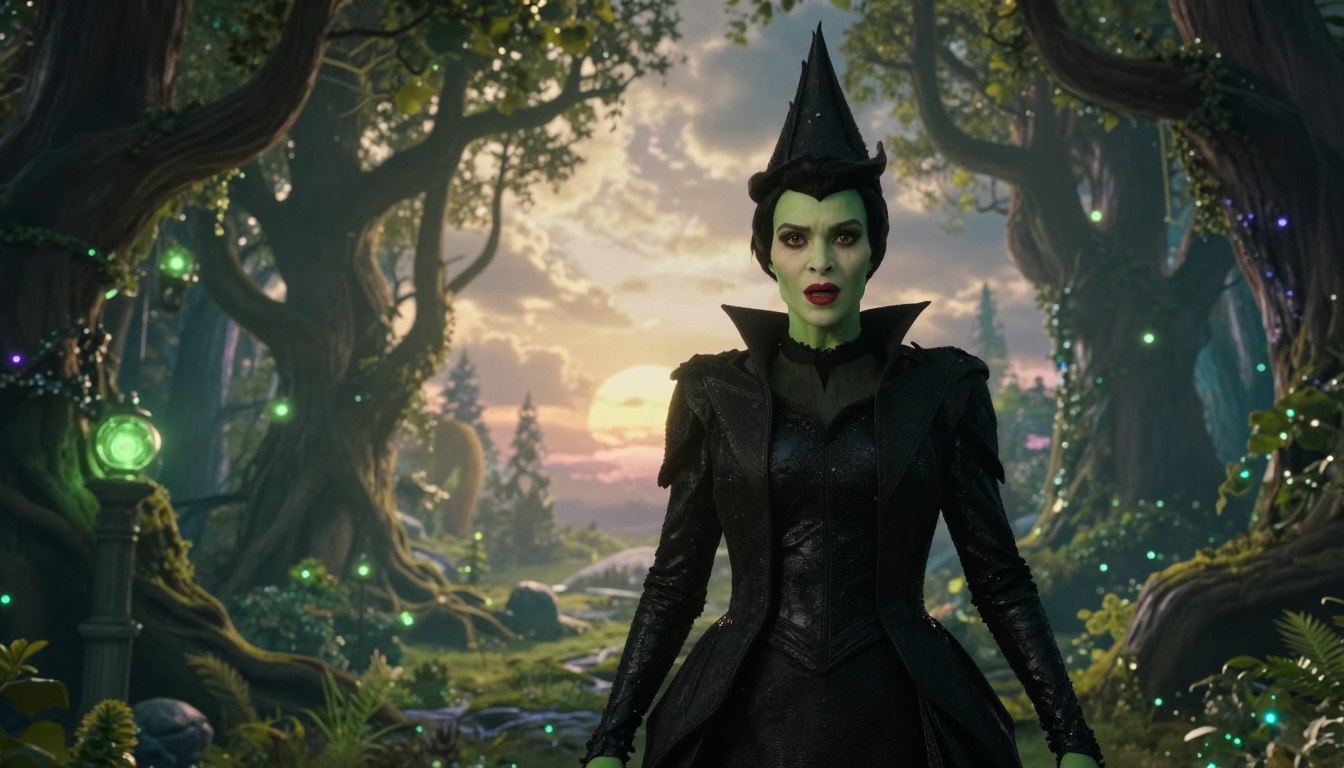
Cynthia Erivo plays Elphaba as a figure punished by a label. The tag “witch west” isolates her and masks the truth about her motives.
Cynthia Erivo makes the role empathetic, showing how demonization controls dissent and erodes safety.
The friendship at the center of the finale
The phrase in the title ties both arcs together: Glinda accepts sacrifice, and Elphaba protects others despite being vilified.
Their bond becomes the device that creates lasting change, even if separation follows.
- Ariana Grande and Cynthia Erivo’s scenes are staged as a two-film culmination.
- The film treats “wicked witch west” as reputation versus reality.
- The ending leans on friendship to turn pain into consequence.
Director Jon M. Chu’s approach: darker tone, bigger Oz, higher stakes
Part Two intentionally deepens the stakes, with director Jon M. Chu favoring tactile world-building over stage mimicry.
Jon Chu said the sequel needed a darker palette because Act II centers on fallout, propaganda, and sacrifice. That shift makes the story political as well as personal.
Why the sequel goes darker
The creative team framed the second installment around hardened identities: Glinda as a public icon, Elphaba as the vilified figure. When labels settle, choices carry consequences.
Practical sets, the Yellow Brick Road, and a “big canvas” philosophy
The production used large practical set builds rather than relying on stage conventions. A real Yellow Brick Road wound through expansive environments to anchor characters in a living world.
Nine million tulips in Munchkinland and broad outdoor sets showed the director’s intent: give big emotional turns room to breathe while delivering spectacle.
“Splitting the adaptation let us paint on a bigger canvas,” the director said, noting scale mattered as much as tone.
| Creative Goal | Production Choice | Story Effect |
|---|---|---|
| Darker moral stakes | Practical sets and large environments | Political tension and personal cost |
| Emotional clarity | Real Yellow Brick Road & detailed locations | Grounded spectacle that supports character beats |
| Bigger cinematic scope | Expanded outdoor shoots and large-scale builds | Allows Act II’s fallout to play on a grand stage |

From “Part Two” to “Wicked: For Good”: why the title choice mattered
Switching the label from a simple number to a named subtitle reshaped the film’s promise and the way audiences read its arc.
The working label — known in production as part two — was neutral. It placed emphasis on sequence, not theme. The final subtitle, announced December 16, 2024, supplied a clear thematic pledge that marketing needed.
The working title vs. the final subtitle
The change turned branding into narrative. A numbered part says, “this continues.” A named subtitle says, “this will mean something.” That shift invited viewers to watch for choices, not just plot mechanics.
How wordplay reframes a moral tag
Reframing the label pulled the loaded word away from a flat verdict and toward a question about perception. In Oz, language is a tool of power.
- Neutral numbering vs. thematic promise
- Title primes audiences to watch the characters’ choices
- It signals that the film’s ending carries irreversible consequences — a change in truth, not just things that happen
The title is more than branding; it frames how the story will close.
Story recap: where the film takes Elphaba, Glinda, and Oz
The film’s middle act tightens into a political struggle that redefines who holds power in Emerald City.
The central conflict becomes a fight over Animals’ rights and the public narrative. Propaganda recasts Elphaba as the wicked enemy while she runs a resistance from hiding.
Animals’ rights, propaganda, and the Wizard’s control of Emerald City
Madame Morrible runs a calculated smear campaign that pushes public opinion and raises the stakes. Her escalation includes a manufactured tornado that brings Dorothy into Oz and upends local rule.
The Wizard, played by Jeff Goldblum, uses spectacle to hold power until cracks appear and the truth begins to leak out.
Fiyero, Boq, and transformations that echo The Wizard of Oz
Fiyero (played by Jonathan Bailey) and Boq (played by Ethan Slater) undergo physical and moral change.
Fiyero becomes the Scarecrow; Boq’s shrinking heart leads to his Tin Man fate. These arcs mirror classic beats while serving the new political story.
Dorothy’s expanded presence and the collision with the classic timeline
Compared with stage versions, Dorothy’s arrival accelerates the plot and forces public consequences. Nessarose (played by Marissa Bode) suffers a tragic turn that makes the conflict unavoidable.
The farewell that makes “For Good” literal
The emotional center stays with Elphaba and Glinda. A new song, No Place Like Home, underscores Elphaba’s isolation and resolve during the Animals’ campaign.
The story closes with a farewell: Elphaba fakes her death, the Wizard departs, and Glinda leads reforms that restore voices to the Animals. The final act turns that parting into a literal, lasting promise.
The music behind the meaning: Stephen Schwartz, new songs, and standout numbers
Music gives the film its emotional argument and ties the title’s meaning to moments on screen.

stephen schwartz returns as a creative lead alongside composer John Powell. Their score makes the subtitle feel like a musical thesis, not just a tagline.
Two new songs were added with clear purpose: “No Place Like Home” (co-written with Cynthia Erivo) and “The Girl in the Bubble.” These additions advance plot and deepen character rather than act as padding.
Standout numbers and why they matter
- No Good Deed presents Elphaba’s breaking point and drives a key moral beat.
- As Long as You’re Mine and For Good deliver emotional payoff and closure.
Performances carry weight; the vocal choices push story instead of offering light diversion. The production expanded orchestrations from 23 players to 125, creating a cinematic sound that supports big emotional turns.
Recording vocals live on set heightened realism and helped performances land in close-up scenes.
stephen schwartz is credited three times across the music, and the overall song design keeps the score central to meaning.
Cast spotlight: familiar faces shaping Oz’s final chapter
A dependable ensemble returns, and their chemistry anchors the film’s final emotional beats.
Jonathan Bailey and Ethan Slater: pivotal turns
jonathan bailey drives the romance-and-tragedy arc that becomes a turning point. His reveal and transformation give the story both heart and consequence.
ethan slater provides a direct link to classic iconography. Boq’s fate bridges old Oz myths with the sequel’s emotional fallout.
Michelle Yeoh and Jeff Goldblum: power and spectacle
michelle yeoh plays the political operator whose moves escalate the darkest plot choices. Her presence sharpens the stakes and tests loyalties.
jeff goldblum appears as a charismatic authority who rules by narrative, not legitimacy. His performance frames the public drama the leads must answer.
Supporting players and fan favorites
Bowen Yang appears in key scenes that shape Glinda’s public-facing world. bowen yang adds moments of humor and human detail that deepen the emotional texture.
marissa bode anchors Nessarose’s personal tragedy, helping the audience feel the cost of the conflict.
Strong performances by the returning cast make relationships feel earned and complicate simple readings of right and wrong.
Reception and debate: what critics and audiences said about the finale
Early reaction split between applause for spectacle and questions about the sequel’s pace.
Critics gave the film a 67% Tomatometer score based on 339 reviews, while audience ratings on Popcornmeter ran much higher at 93% from 10,000+ verified ratings. IMDb lists a 6.9/10. These numbers show a mixed but largely positive public response.
Common praise focused on lead performances, the film’s cinematic scale, production design, and costume work. Reviewers noted that visual detail and wardrobe elevated Oz into a convincing big-screen world.
Praise highlights
- Standout lead performances carried emotional beats.
- Cinematic scope and design made spectacle feel earned.
- Costumes and production design received frequent mention.
Frequent critiques
Many critics pointed to pacing issues tied to Act II’s structure. The film’s unhurried approach sometimes blunted forward momentum.
Debate also centered on whether the new movie’s songs land as instantly memorable compared with earlier set pieces. That argument is common with musicals, where standout numbers often shape audience recall.
The conclusion is widely called rousing, even when the middle sections test patience.
| Metric | Value | Read |
|---|---|---|
| Rotten Tomatoes (critics) | 67% (339 reviews) | Mixed critical consensus |
| Popcornmeter (audience) | 93% (10,000+ verified ratings) | Strong audience approval |
| IMDb | 6.9 / 10 | Solid general rating |
Opening-weekend discussion often split between general moviegoers and long-time fans. Moviegoers emphasized spectacle and pacing, while fans weighed fidelity, emotional payoff, and whether things from the stage translated faithfully.
This snapshot reflects the debate: the film earns praise for performances and worldbuilding, even as critics flag structural choices that make Act II feel uneven.
Conclusion
, The final act turns a clever title into a clear moral claim about change and consequence. It signals permanent change and asks readers to rethink who gets labeled wicked and why.
The subtitle runs two tracks at once: plain-English wordplay and a direct nod to the musical’s farewell. That duality gives the film emotional ballast and keeps the moment meaningful on screen.
The sequel closes the two-part adaptation with a darker, consequence-driven ending that completes the story rather than stretching it. Across both films, the central idea stays with audiences over time.
At its core the theme is public perception versus private truth — the power of a label and the cost of moral courage. If you came for the title meaning, it is inseparable from the finale: what changes, changes the film itself.
FAQ
What is Wicked for Good? Exploring its meaning
Wicked: For Good is the subtitle for the second film in the cinematic adaptation of the Broadway musical. It signals both a narrative close to the stage show’s themes and a thematic focus on lasting change, friendship, and moral choices that reshape characters’ lives in Oz.
Why is “Wicked: For Good” in the news?
The film is widely discussed because it completes the two-part screen adaptation, features high-profile stars and a major studio rollout, and reinterprets a beloved musical. Media attention centers on casting, director Jon M. Chu’s darker tone, new songs by Stephen Schwartz, and how the finale ties into the original stage legacy.
What does the 2025 sequel title signal for the story?
The subtitle suggests closure and permanence—relationships and choices that have lasting impact. It also frames Part Two as an emotional endpoint where decisions made by Glinda and Elphaba resolve long-running conflicts and align with the musical’s central song, “For Good.”
How does the subtitle connect the films to the Broadway musical’s legacy?
Using a phrase from the musical’s well-known song creates a direct emotional bridge. It cues audiences to expect the same themes of friendship, sacrifice, and transformation that made the stage show resonant, while allowing new cinematic elements and expanded storytelling.
What does “for good” mean in plain English within the film?
In the film’s context, “for good” carries two related meanings: permanently (as in a final state) and in the sense of acting for the benefit of others. The ambiguity lets the story play with destiny and moral intent—whether actions make a character irrevocably changed or genuinely kinder.
How does the phrase land differently in Oz than in everyday speech?
In everyday speech, “for good” usually means permanently. In Oz, the phrase also gains moral weight: choices labeled as “for good” are judged by public perception, political consequences, and the myth-making of Emerald City, making the term richer and more contested.
How does the musical’s “For Good” shape the film’s themes?
The song provides an emotional anchor, spotlighting friendship and the idea that personal connections change people irreversibly. The film uses that sentiment to frame key relationships and to underscore the cost and clarity that come with sacrifice and reconciliation.
Why did the filmmakers use a song title as a film subtitle?
The song is one of the musical’s most recognizable emotional moments. Adopting it as a subtitle creates instant recognition, promises emotional stakes, and binds the cinematic version to the stage show while signaling the film’s thematic intent.
When is the Universal Pictures release and U.S. rollout?
Universal Pictures scheduled the U.S. release as part of a coordinated rollout, with promotional windows and premiere events to match. Exact dates varied by market; check Universal’s official release calendar for precise timing and any updates.
What is known about the film’s budget and box office context?
The production had a major studio budget to support large-scale sets, effects, and a star cast. Box office expectations were high given the property’s popularity; performance comparisons consider marketing scale, competition, and franchise momentum.
What are the runtime, rating, and genre positioning for U.S. audiences?
The film positions itself as a musical fantasy with dramatic stakes. Runtime and rating were set to balance spectacle and emotional depth for a broad audience; check theater listings or studio details for the final runtime and MPAA rating.
What does “for good” mean for Glinda and Elphaba, played by Ariana Grande and Cynthia Erivo?
For Glinda, the phrase highlights the gap between her public image and private guilt, asking whether she can act selflessly. For Elphaba, it frames the cost of being labeled a villain and whether her choices lead to lasting, positive change despite the stigma.
How does the friendship between Glinda and Elphaba shape the finale?
Their bond drives the emotional core of the finale. Reconciliation, sacrifice, and mutual recognition make the ending feel earned, and the film uses that friendship to make “for good” both literal and metaphorical.
What was Jon M. Chu’s approach to Part Two’s tone and scale?
Director Jon M. Chu embraced a darker tone and a larger visual canvas to raise the stakes and expand Oz. He balanced intimate character moments with big production set pieces, practical environments, and cinematic spectacle to deepen the story’s impact.
Why did Jon M. Chu say Part Two goes darker?
Chu indicated the sequel needed greater emotional and thematic weight to resolve character arcs and conflicts established earlier. A darker palette and higher stakes help the film arrive at a more dramatic and satisfying conclusion.
How were practical sets and the Yellow Brick Road used in the film’s design?
Production favored physical sets and practical effects to ground fantasy sequences. The Yellow Brick Road and other signature elements were reimagined on a bigger scale to blend tactile filmmaking with visual spectacle and immersive world-building.
Why did the filmmakers change the working title “Part Two” to “For Good”?
The shift from a generic “Part Two” to a meaningful subtitle clarifies the film’s emotional direction. It transforms the installment from a mere continuation into a thematic statement about closure and moral consequence.
How does the title reframing affect interpretation of “wicked”?
The subtitle reframes “wicked” as layered—part destiny, part perception, and part personal choice. It invites viewers to reconsider labels and emphasizes how actions, reputations, and redemption interact in the story.
What major story elements drive the film’s plot?
Key threads include political propaganda in Emerald City, animals’ rights, the Wizard’s authoritarian control, and character arcs involving Fiyero, Boq, and others. These strands intersect with expanded appearances by Dorothy and an ending that makes the subtitle literal.
How do Fiyero and Boq’s transformations connect to The Wizard of Oz?
Their arcs echo motifs from the classic timeline—identity shifts, loyalty, and sacrifice. The film uses those transformations to bridge the prequel narrative with the familiar mythos of Oz while deepening emotional stakes.
How prominently does Dorothy appear and why does that matter?
Dorothy’s expanded presence creates a direct collision with the classic timeline, raising tension about fate and continuity. Her role helps amplify the stakes of the finale and clarifies how choices affect Oz’s future.
Which new and standout musical numbers appear in the film?
Alongside stage favorites, the film adds new songs like “No Place Like Home” and “The Girl in the Bubble.” These pieces aim to expand character perspectives and provide fresh emotional beats within the cinematic score.
How are fan-favorite moments handled musically?
The film preserves signature numbers such as “No Good Deed,” “As Long as You’re Mine,” and “For Good,” while reorchestrating some pieces for a broader, more cinematic sound to match larger staging and a fuller orchestra.
Who are the principal cast members shaping Oz’s final chapter?
The cast includes Ariana Grande and Cynthia Erivo in lead roles, with Jonathan Bailey and Ethan Slater in pivotal parts. Jeff Goldblum and Michelle Yeoh headline key supporting roles, joined by performers like Bowen Yang and Marissa Bode.
What critical praise did the finale receive?
Critics often lauded performances, production design, costumes, and the film’s cinematic scale. Many reviews highlighted emotional performances and the visual realization of Oz as standout elements.
What common critiques emerged about the film?
Typical criticisms focused on pacing—particularly in Act II—song memorability for some new numbers, and challenges balancing spectacle with character development. Opinions varied between enthusiasm for the spectacle and calls for tighter narrative focus.